Burkina Faso’s new gold refinery has got people talking. It should also get us asking some uncomfortable questions about Nigeria.
Let me start with a confession. Every time one of those Traoré videos lands in my WhatsApp, the ones with dramatic music and a caption about how he has single-handedly freed Africa, I roll my eyes a little. Half of what is in them is not true. But if I’m honest, there’s a small voice that follows the eye-roll. It asks: why does it feel like a young captain in Ouagadougou is doing more with less than the people running Abuja?
That question is what this piece is about.
Nigeria is a strange place. We are the most populous country in Africa. We have oil, gas, fertile land, solid minerals and some of the most hardworking, creative people you will find anywhere. Nigerians are running hospital wards in the UK and building tech companies in the US. Yet back home, a lot of us still can’t count on light for a full day. Food prices have us doing mental gymnastics in the market. The roads are, well, you know the roads. And depending on where you live, getting home safely in the evening is not a given.
We’ve heard every explanation in the book. There’s no money. We inherited the mess. Reforms take time. Make sacrifices today for a better tomorrow. To be fair, some of these are true. Nigeria is a hard country to govern and real reform hurts. But at some point the explanations have to give way to results. We can’t keep living on “tomorrow”.
So what has Traoré actually done?
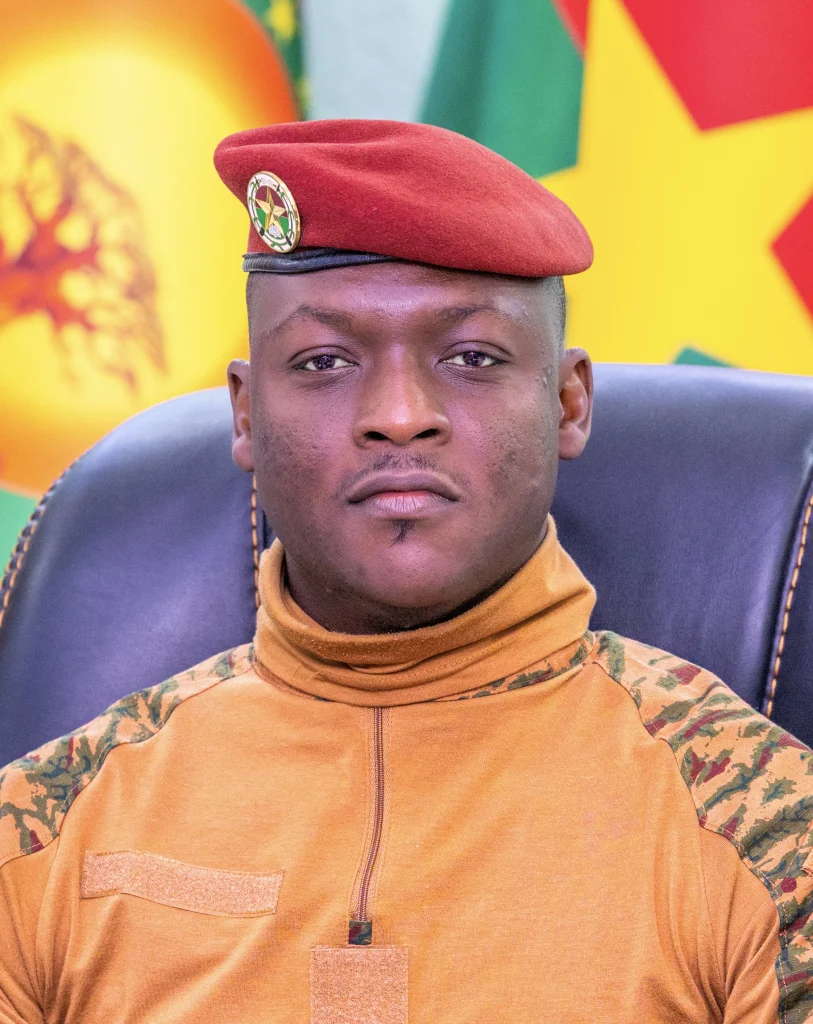
On the 28th of September, Burkina Faso opened its first gold refinery, Raffinor-BF, in Ouagadougou. It reportedly cost about $19 million and can process 164 tonnes of gold a year. Traoré’s message at the opening was simple. Burkinabè gold should not just be dug up at home; it should be refined, valued and certified at home too, instead of being shipped off so someone else makes the real money.
Before anyone starts printing T-shirts, let’s slow down a bit. That 164-tonne capacity is bigger than the 94 tonnes of gold the whole country produced in 2025. A refinery’s capacity is not the same thing as a refinery’s success. We still need to see the actual output, the jobs and the profits, and whether the gold will even get there when a large chunk of it comes from artisanal miners and leaves the country through informal channels.
We should also be clear about who Traoré is. He came to power through a coup. His government is fighting a brutal insurgency, it has been accused of serious human rights abuses, and Burkina Faso is not a democracy. I’m not here to make him a saint.
But the idea behind that refinery, keeping more of the value of your own resources, is a good one. It’s an idea we should be putting to our own leaders.
Nigeria doesn’t need a coup to build factories. What we need are institutions that can turn plans into things that actually work.
Hold on, we already have Dangote
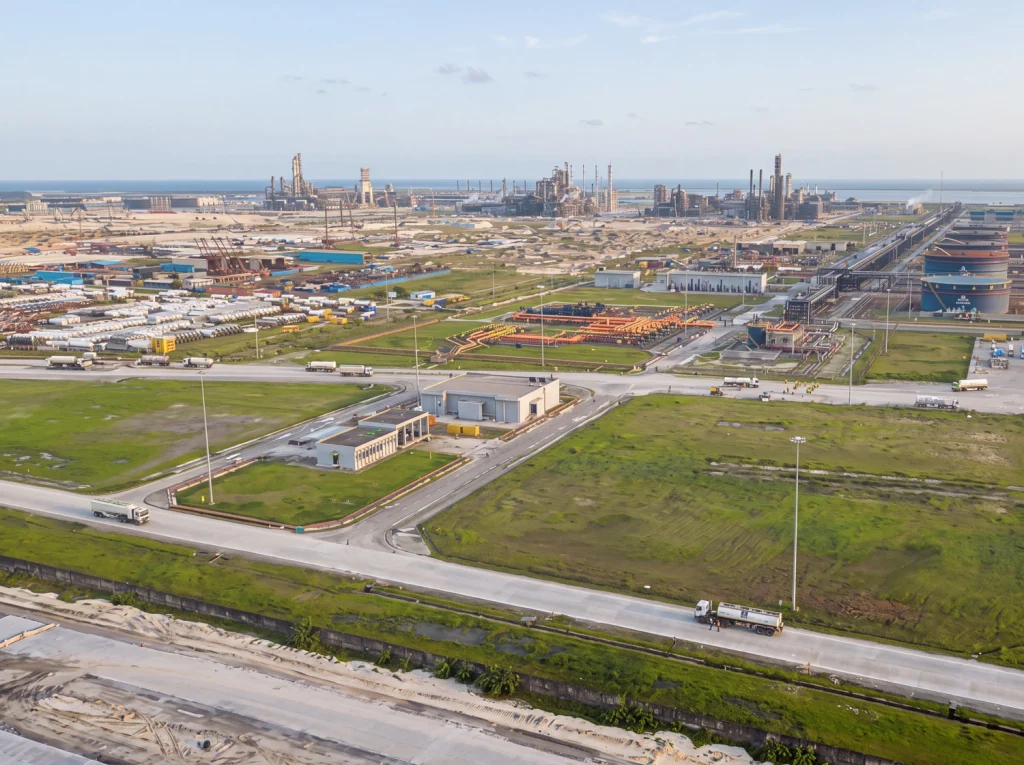
Here’s the funny part. If we’re talking refineries, Nigeria is already playing in a much bigger league.
The Dangote Refinery cost an estimated $20 billion and has a capacity of around 700,000 barrels a day. For decades we sold our crude and bought back fuel, a bit like a farmer who sells his tomatoes and then buys tomato paste at five times the price. Dangote has started to change that.
But look at what happened in July. The refinery started pricing fuel sold to Nigerian marketers in dollars. Why? Because it couldn’t get enough Nigerian crude under the government’s naira-for-crude arrangement. NNPC had raised its supply to about seven cargoes in May, but the refinery says it needs 13 to 15 a month. The rest had to be imported at international prices, paid for in dollars, while the products were being sold in naira. No business can carry that kind of mismatch forever.
Read that again. Africa’s biggest refinery, sitting in one of Africa’s biggest oil-producing countries, was struggling to buy oil at home. You can’t make this stuff up.
In fairness, things have improved. By September, Reuters reported that Dangote had lined up at least 16 million barrels of Nigerian crude for October, through a mix of NNPC allocations and its own tender purchases. That’s good news and I won’t pretend the problem is permanent. But it shows that building the factory is only half the job. A business also needs steady supply, fair rules, working infrastructure and arrangements it can actually plan around.
Then there are our own government refineries in Port Harcourt, Warri and Kaduna. Back in 2021, the Federal Executive Council approved over $3 billion to fix them. Five years later, they are producing next to nothing. Earlier this year, NNPC’s own leadership explained that it had halted operations because the plants were losing money, and the latest plan is to bring in outside technical partners to run them.
I’m not saying government ownership is evil, and I’m definitely not saying Dangote should get a monopoly. Nobody wants one company holding the whole country by the neck. My questions are much simpler. How much was spent? What did we get for it? And who has been held responsible?
Corruption is expensive. So is showing off.
Our problem isn’t only that there isn’t enough money. It’s also what happens to the money we do have.
Transparency International gave Nigeria 26 out of 100 on its 2025 Corruption Perceptions Index. That put us 142nd out of 182 countries, behind 33 other African nations. The ICPC, through its projects tracking work, keeps documenting inflated contracts, duplicated projects and projects that were paid for but never delivered. To be fair, this rot didn’t start with the current government. It cuts across administrations. If anything, that makes it worse, because it tells you the system itself leaks.
Then there’s the lifestyle of the people in power.
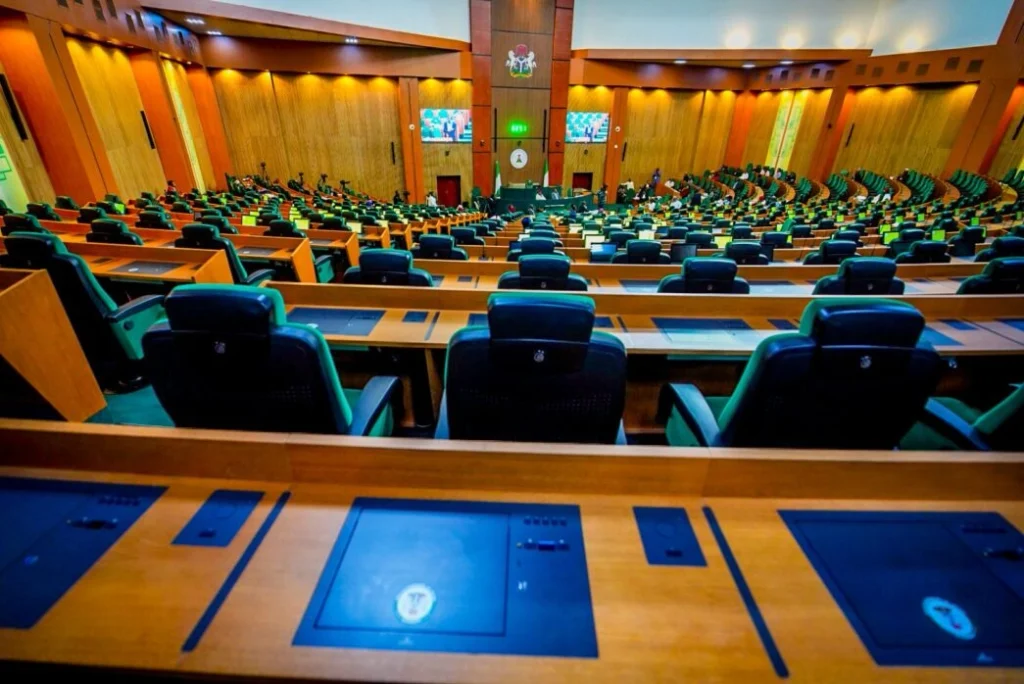
In May, a Federal High Court in Lagos declared the National Assembly’s ₦110 billion spending on vehicles and allowances unlawful. That was ₦40 billion for 465 vehicles and ₦70 billion in support allowances for new members, approved in 2023 while the rest of us were still reeling from subsidy removal. Justice Yellim Bogoro held that the lawmakers failed to show they had followed procurement rules or got value for money. Now, that judgment is not the same as saying every lawmaker committed a crime. But sit with it for a moment. A court found that the people who make our laws didn’t follow the law when buying their own cars.
And just this month, seven Toyota Land Cruiser Prados were presented to youth leaders of the APC for “grassroots mobilisation” ahead of 2027. Premium Times reported that the First Lady acknowledged donating them. Let me be careful here. Nobody has shown that public money paid for those vehicles, and their cost hasn’t been independently confirmed. The opposition ADC says they’re worth around ₦1 billion and wants to know who paid, but it hasn’t produced evidence either. Still, when you are asking a whole country to tighten its belt, rolling out luxury SUVs for party officials is a terrible look.
Not every expensive purchase is corruption. Not every controversial project is a white elephant. But if you expect discipline from the people, you have to show it first.
Credit where it’s due
I want to be fair here, because a rant that ignores the good parts is just noise.
President Tinubu’s government took decisions that previous governments kept running away from. The petrol subsidy is gone. The exchange rate has been unified. The tax system has been overhauled. These were painful moves and many of us are still feeling them, but there are real results to show for them.
The IMF estimates the economy grew by 4% in 2025. The World Bank says growth reached 4.2% in the first half of this year, up from 3.9% in the same period last year. Inflation dropped from 27.6% in January 2025 to 15.2% by December, before the oil price shock from the Middle East conflict slowed that progress. External reserves have climbed above $54 billion. And in October 2025, Nigeria finally got off the FATF grey list.
These things matter. Without a stable economy, businesses can’t plan, investors stay away and government finances fall apart. The administration deserves acknowledgement for that.
But stabilising an economy and making life better for people are two different jobs. They’re related, but they’re not the same thing.
So where is the money going?
This is the part that bothers me most.
The IMF says 63% of Nigerians were living below the national poverty line in 2025, and about 27 million people faced food insecurity in the second half of that year. The World Bank now says the poverty rate has stopped rising for the first time since 2019. That’s progress. But “it stopped getting worse” is not the same as “it got better”.
Falling inflation doesn’t mean prices went back down. It only means they’re rising more slowly. The bag of rice you bought in early 2023 isn’t going back to that price. A family that can’t afford food can’t eat a GDP figure. A manufacturer running his factory on diesel can’t power it with foreign reserves.
For a long time, the big question was what happened to the subsidy savings. In June, the IMF said savings of around 2% of GDP didn’t appear to have made it into the 2025 federal budget, and flagged spending happening outside the budget.
To the government’s credit, it responded. In August, Finance Minister Taiwo Oyedele presented a scorecard. By his account, subsidy removal generated ₦15.8 trillion for the federation between June 2023 and December 2025. The federal government got ₦5.4 trillion of that, while states and local governments shared ₦10.4 trillion. He said the federal government spent ₦9.39 trillion on higher wages and allowances, more than its entire share of the savings, and about the same again servicing external debt. The IMF’s own numbers back up the debt pressure: interest payments ate up more than half of federal revenue in 2025.
That’s the kind of accounting Nigerians have been asking for, and I hope it becomes a habit rather than a one-off.
But notice where most of that money went. To the states. The World Bank’s latest report says state revenues rose by about 93% in real terms between 2023 and 2025. States spent a lot more on roads and buildings, which is fine. But education’s share of state spending actually fell, from about 15% in 2021 to 12% in 2025, and health stayed stuck at around 7%.
So my question is no longer just for Abuja. Your governor has had a lot more money to work with these past three years. What did your state do with it? Is the school down your road any better? Is the general hospital better equipped? If you don’t know the answer, that’s part of the problem.
We don’t need another grand plan
We’ve had Vision 2020, transformation agendas, industrial policies and roadmaps of every colour. What has always been missing is the link between the promise and the result. Here’s what I’d like to see, and honestly, none of it is rocket science.
Every major public project should have a page anyone can check: the budget, the contractor, how much has been paid, when it should be finished and what has actually been done. Then let the auditors and procurement agencies verify those records without looking over their shoulders.
Judge the power sector by how many hours of light homes and businesses actually get, not by how many megawatts were “installed” at a ribbon-cutting.
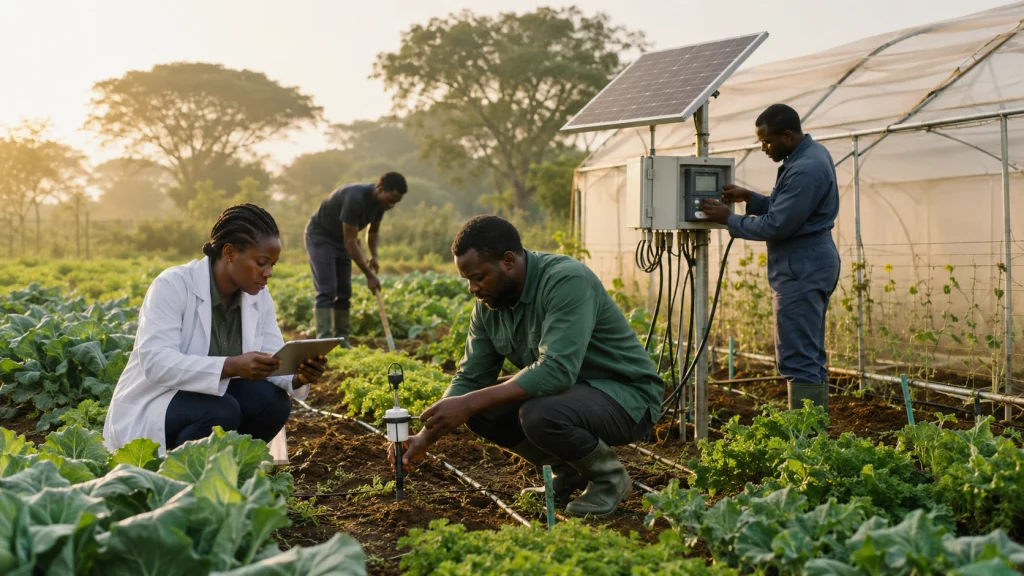
Stop treating food security as a fertiliser distribution exercise. Farmers need to be safe on their farms. They need irrigation, storage, processing, decent roads and markets they can reach.
If government is giving incentives to industries, make them public and tie them to things we can measure: investment, jobs, productivity and exports.
And please, invest in people. Schools, hospitals, technical colleges and primary healthcare centres are not luxuries we get to after the “real” economy is fixed. They are the foundation of it.
None of this needs a soldier in the villa. It needs clear priorities, competent people, independent checks and leaders who are willing to be measured.
The real lesson from Ouagadougou
Burkina Faso’s gold refinery is an attempt to keep more value at home. Dangote’s refinery shows that Nigeria can build at a scale few African countries can match. Neither one proves that every policy around it is working, and neither should make us forget why democracy, free speech and institutions that check power actually matter.
The lesson isn’t that we should copy Burkina Faso’s government. It’s that we should look at what works, understand why it works, and do it our own way, through institutions that protect the public.
Dear Nigerian leaders
Nigeria has everything it needs to do far better than it is doing. There has been real progress in some areas, and I’ve tried to give credit for it. But there are also failures that keep repeating themselves, in how we manage public money, how we build things and how we deliver the most basic services.
So here are the questions I believe you should be judged by. Are businesses getting more reliable electricity? Can farmers grow and move food more cheaply? Are our children actually learning more? Are public projects finished on time and on budget? Can an ordinary citizen trace public money from the budget to the finished project? And most importantly, is the better economy you keep telling us about showing up in our homes?
We don’t need military rule. We don’t need another personality cult. We need a system where ambition comes with execution, where spending can stand up to scrutiny, and where progress doesn’t disappear every time a new government moves in.
Nigeria’s potential has never really been in doubt. Turning it into something Nigerians can see, touch and live with is the real job.
And to the rest of us, this one is on us too. We get the leaders we tolerate. As 2027 draws closer, let’s ask these questions loudly and keep asking them. Let’s not trade them for a bag of rice, a branded T-shirt or a ride in somebody’s new Prado. A mess of pottage is still a mess of pottage.
Stay safe, folks.
Sources
- Burkina Faso refinery: Mining MX / Bloomberg, African Leadership Magazine
- Dangote dollar pricing, July 2026: Reuters via MarketScreener
- Dangote October crude purchases: Reuters via MarketScreener
- State refineries: The Guardian Nigeria, Nairametrics
- Corruption Perceptions Index 2025: BusinessDay, Transparency International
- ICPC projects tracking: ICPC
- National Assembly ₦110bn judgment: The Guardian Nigeria, TheCable
- APC youth leaders’ SUVs: Premium Times
- IMF 2026 Article IV: IMF
- IMF concerns on off-budget spending: Capmad
- Subsidy savings scorecard, August 2026: ThisDay, The Guardian Nigeria
- World Bank Nigeria Development Update, October 2026: World Bank