Your phone probably isn’t listening to every conversation. The truth may be more unsettling.
On Monday, I was chatting with a friend who’d suddenly started seeing ads for loans. Now, if anyone in our circle needed a loan, it wasn’t him. He’s comfortably well off, about the last person you’d expect a loan app to chase. Half-joking, I told him he must have been having money conversations around his phone.
We laughed. But it’s the kind of joke that only works because half of us secretly believe it.
I can’t really talk, either. My phone has been pushing travel ads at me lately like it knows something about my plans that I don’t.
Because I work in digital, this is one of the questions I get asked most. It usually comes with a story. Someone was talking about something completely random: a holiday in Zanzibar, a new pair of sneakers, a restaurant in Lekki. They didn’t Google it. They didn’t search Instagram. They just talked. A day or two later, there it was on their feed: an ad for the exact thing.
Coincidence? Maybe. But when it keeps happening, it’s hard not to wonder who, or what, is listening.
Is your phone really listening?
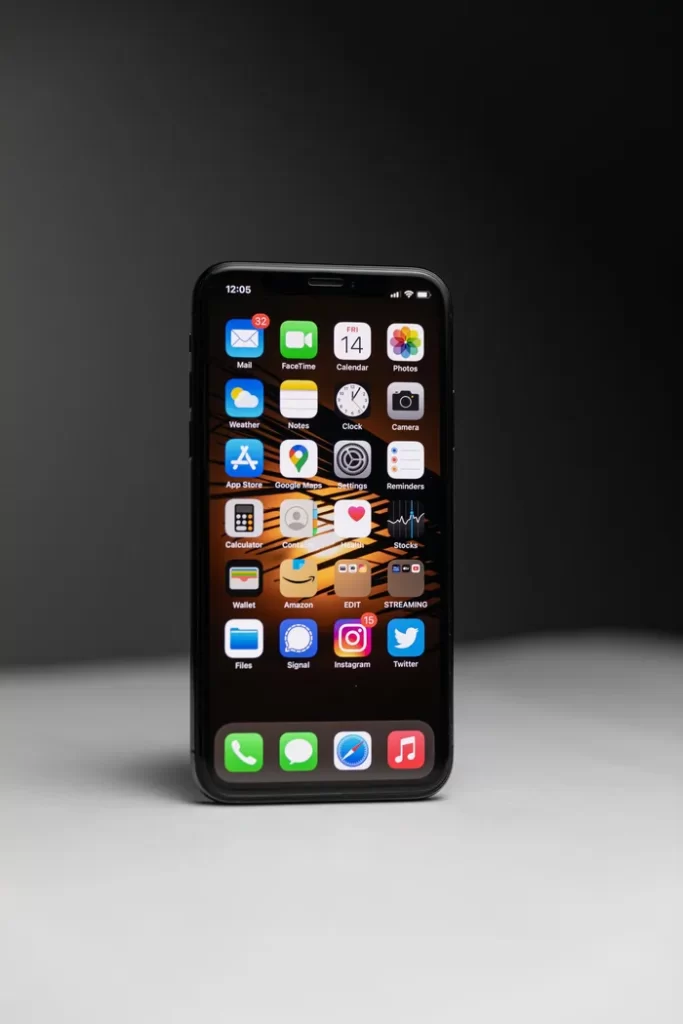
It’s the explanation I hear most: “Our phones are listening to us.” I understand why. Our phones have microphones, half the apps we install ask for microphone access, and voice assistants wake up the moment we call their names. So yes, the technology exists. But possible and actually happening are two very different things.
Meta has denied it for years. Back in 2016, Facebook published a short statement saying it does not use your phone’s microphone for ads or for what you see in your feed. Ads, it said, come from your interests and profile, not from what you say out loud. In October 2025, Instagram’s head, Adam Mosseri, went further in a video addressing the rumour: “We do not listen to you.” His argument was that it would be a gross violation of privacy, and you’d notice anyway. Your battery would drain and your phone’s microphone indicator would light up.
Of course, a company saying it isn’t doing something is not proof. We’re Nigerians. We’ve heard “the rumour is baseless” from official quarters before. So let’s look at what independent researchers found.
In 2018, computer scientists at Northeastern University tested more than 17,000 popular Android apps, Facebook’s included, to see if any were secretly recording audio. Their conclusion: not one app switched on the microphone or sent audio out without being prompted. Not one.
Here’s the twist. The same researchers found some apps quietly taking screenshots and screen recordings of what people were doing and sending them off to third-party analytics companies, without telling anyone. In one case, the recording picked up personal details a user had typed in. So the apps weren’t listening. Some of them were just watching. I’m not sure that’s better.
That doesn’t mean every app gets a clean bill of health. In 2024, leaked marketing material from a US media company, Cox Media Group, boasted about “Active Listening” technology for targeting ads. Meta’s response was that it does not use your phone’s microphone for ads. Whether that pitch was real capability or sales talk, it’s a good reason to stay alert.
Still, an eerie coincidence is not proof of surveillance. And there’s a much simpler explanation.
What if they don’t need to listen?
You’re leaving clues everywhere

Think about how you actually use the internet. You search for something on Google. You visit a website. You stare at a photo a few seconds longer than usual. You watch a video, follow someone new, add something to your cart and then abandon it like a January gym membership. On their own, none of these things mean much. Put together, they tell a story.
You don’t have to take my word for it. The platforms say so in their own help pages. Google says personalised ads draw on the activity saved to your Google account, and gives the example of seeing a car ad because you watched a YouTube video about the best new cars this year. Another of their examples: search for a running video on YouTube today, and you may get an ad for running shorts the next time you visit.
Meta is just as open about it. When you visit a website or buy something online, that business can share your activity with Meta. In June 2026, Meta announced that it already uses this data, things like purchases you make or games you play on other sites, to make ads more relevant, and that it would start using it to shape your feed and Meta AI’s answers too. So the online store you browsed last Tuesday may have gone and snitched to Instagram.
Anyone who has set up an ad campaign on Meta or Google knows how detailed the targeting is. Advertisers can reach people by interest, by behaviour, by the websites they’ve visited. Nobody has to say a word out loud.
So picture this. Over the past few weeks, you’ve watched a few home renovation videos. You visited a furniture website and lingered on the kitchen designs. You haven’t decided to redo your kitchen, not consciously anyway. But an advertising system could reasonably conclude you’re heading that way. Then, chatting with a friend, you mention you’re thinking of changing your cabinets. The next day, an ad for a kitchen design company shows up.
It feels like your phone overheard you. It didn’t need to. The system had clocked your interest before you opened your mouth.
Sometimes the algorithm knows before you do
We like to think our decisions start the moment we make them. Most don’t. They build up slowly. We get curious, start noticing things, watch a few videos, compare options, often without realising we’re doing it. Our online behaviour picks all of that up long before we say anything out loud.
Algorithms are very good at spotting those patterns. They don’t need to understand you the way a friend does. They just need to see how your behaviour lines up with millions of other people’s. People who watched this also watched that. People who bought this usually looked at that. From those patterns, the system makes predictions.
How good can those predictions get? A 2015 study by researchers at Cambridge and Stanford, published in PNAS, used nothing but people’s Facebook Likes to judge their personalities, and the computer beat the people around them. According to the Stanford Daily’s report on the study, it beat a work colleague after 10 Likes, a friend after 70, family members after 150 and a spouse after 300. Your husband or wife of ten years, outdone by 300 Likes. Make of that what you will. And that was over a decade ago, using one signal. Today’s systems use far more.
They also get things gloriously wrong. Anyone still getting ads for something they bought three months ago knows that. Ask my friend with the loan ads. Either the system misread him, or the advertiser was firing ads at anyone with a pulse and a phone. Whichever it was, nobody had to eavesdrop to get it that wrong.
But when these systems get it right, it can feel almost spooky. We’re just not used to machines spotting what we want before we’ve said it.
Our minds play tricks on us too
There’s another part of this story we tend to ignore: us. Our brains love a coincidence, especially one that confirms what we already suspect. Talk about a car, see an ad for it twenty minutes later, and you’ll be telling the story at every gathering for a month. The hundreds of ads that had nothing to do with your conversations? You won’t remember a single one.
Psychologists call this confirmation bias: we notice and remember what supports our beliefs and quietly ignore what doesn’t. Then there’s the frequency illusion, also called the Baader-Meinhof phenomenon. Once something catches your attention, you start seeing it everywhere. Learn about a particular car model, and suddenly half of Lagos is driving one. Those cars were always there. Your attention is what changed.
And conversations don’t come from nowhere. If a friend brings up Zanzibar, it’s usually because they’ve already been reading about it, watching videos or checking flights. The interest came before the conversation. You were just the last to hear about it.
None of this makes targeted advertising less sophisticated or less invasive. It just means our own minds make it look sharper than it really is.
The real question isn’t whether they’re listening

We’ve spent so much energy wondering whether our phones are listening that we’ve missed how much we hand over freely. We tap “Accept all” without reading a word. We give apps permissions they have no business asking for. We sign into random websites with our Facebook or Google accounts. We let platforms follow us from app to app and don’t think twice about it.
Why? Convenience. I get it. I like apps that remember my preferences and recommendations that save me time as much as anyone. But personalisation runs on data, and the more personal things get, the more questions we should be asking. Who has access to that data? How long do they keep it? Who else gets to see it? And how much say do we actually have?
For those of us in Nigeria, that last question has at least a partial answer. The Nigeria Data Protection Act 2023 gives you specific rights over your personal data, including, under section 36, the right to object to it being used for direct marketing. As legal analysts at Templars point out, that right is absolute: once you object, your data should no longer be used for that purpose. Most of us have never used it. Most of us didn’t know we had it.
When personalisation becomes manipulation
This goes beyond adverts. The same systems that guess what you might buy also decide what you see: which news shows up in your feed, which opinions get pushed to the top, which video plays next. Recommendations aren’t bad in themselves. Without them, the internet would be a jungle. The trouble starts when the goal shifts from showing you what’s useful to showing you whatever keeps you scrolling.
There’s research on exactly this. In a pre-registered study of 806 Twitter users, researchers from Cornell Tech, UC Berkeley and the University of Washington compared what Twitter’s engagement-based algorithm showed people with what they’d have seen in a plain chronological feed. Published in PNAS Nexus in 2025, the study found the algorithm pushed more emotionally charged, hostile political content, the kind that left people feeling worse about those on the other side. And when asked, users said they didn’t actually prefer the political posts the algorithm chose for them.
So what we click on and what we want are not always the same thing. A system built for engagement can tell the difference, and it usually picks engagement.
Over time, that shapes what we see and, possibly, how we see the world. Back in the newspaper days, everyone who bought the paper saw the same front page. Today, two people sitting side by side in the same danfo can open the same app and come away with two different Nigerias.
So what can you do?
Before anyone throws their phone into the lagoon: I’m not saying quit social media or move to a village with no network. That’s not realistic, and it’s not necessary. But we do need to be more deliberate about how we use these things. Here’s my checklist:
- Check your app permissions. Does a shopping app really need your microphone or your contacts? I’d love to hear the explanation. On both iPhone and Android, you can review microphone access app by app in your privacy settings.
- Visit Google’s My Ad Center. Google lets you see the topics it associates with you, and switch personalised ads off or stop your YouTube and web activity being used for ads.
- Review your Meta settings. In Accounts Center, look at your ad preferences and the setting for activity that other businesses share with Meta. Meta is replacing “Your activity off Meta technologies” with “Activity from other businesses”, and the change is rolling out country by country, so you may see either name.
- Think before you tap “Accept all”. When a website or app asks to track you, you don’t have to say yes.
- Limit cross-app tracking wherever your phone gives you the option.
- Notice the link between what you do and what you’re shown. Once you start paying attention, the pattern becomes surprisingly easy to see.
None of this guarantees complete privacy, but it cuts down what you’re giving away and puts you back in charge of more of it. One honest caveat: switching off personalised ads won’t stop the ads. Google says you’ll still see them. They’ll just be based on general context, like the page you’re on, rather than your history. Fewer creepy ads, same number of ads.
So, are you being watched?

In a sense, yes. Not by someone in a dark room with headphones on, and probably not through the secret microphone surveillance so many of us imagine. But everything we do online leaves a trail, and that trail is collected, analysed and used to predict what we like, what we want, what we’ll buy and what will keep us scrolling.
Some of those predictions miss badly, like my friend’s loan ads. Others land so well that we’re convinced someone must have been listening.
I’ll keep teasing my friend about his money conversations. But next time it comes up, I’ll ask him a better question: how much has he already given away without saying a word? And with all those travel ads on my phone, I should probably ask myself the same thing.
Because the most effective form of observation may not be listening to what you say. It may be learning enough about what you do to predict what you’ll say next.
Have you had one of those “my phone is listening” moments? I’d love to hear about it. And if you need help making sense of your own privacy settings, drop me a line using my contact form.
References
Meta and the microphone
- Facebook (2016). Facebook Does Not Use Your Phone’s Microphone for Ads or News Feed Stories. Meta Newsroom.
- Android Headlines (October 2025). Instagram denies spying on users, explains spot-on ads. Coverage of Adam Mosseri’s video.
- TweakTown (2024). Report on Cox Media Group’s “Active Listening” pitch deck, including Meta’s response.
How Google and Meta personalise ads
- Google. How personalized ads work. My Ad Center Help.
- Google. Control what data Google uses to show you ads. My Ad Center Help.
- Meta (June 2026). Better Personalization and Changes to Controls for Your Activity From Other Businesses. Meta Newsroom.
Independent research
- Pan, E., Ren, J., Lindorfer, M., Wilson, C. & Choffnes, D. (2018). Panoptispy: Characterizing Audio and Video Exfiltration from Android Applications. Summarised by Northeastern University and TechTarget.
- Youyou, W., Kosinski, M. & Stillwell, D. (2015). Computer-based personality judgments are more accurate than those made by humans. PNAS, 112(4), 1036–1040.
- Milli, S., Carroll, M., Wang, Y., Pandey, S., Zhao, S. & Dragan, A. D. (2025). Engagement, user satisfaction, and the amplification of divisive content on social media. PNAS Nexus, 4(3).
Your rights in Nigeria
- Nigeria Data Protection Act, 2023, Part VI (Rights of a Data Subject), section 36.
- Templars (2025). Unsolicited Messaging and the Limits of Opt-Out Provisions.