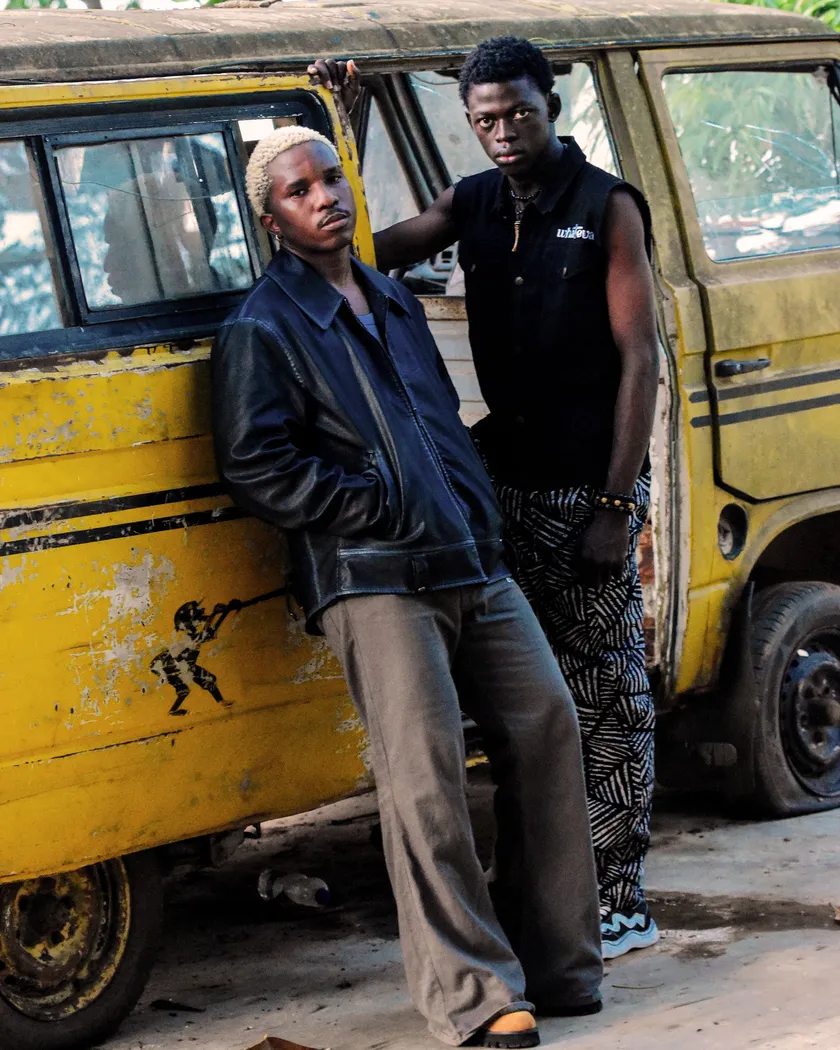
The young men collecting “money for the boys” on our streets are the most visible part of a much bigger system. It is time we talked about the rest of it.
Welcome to Lagos
Let me start with something every Lagosian already knows. At some point, a complete stranger will ask you for money for doing something perfectly legal.
You could be moving house, receiving a delivery, fixing your roof or bringing home a new fridge. Somewhere along the way, a few young men appear and ask for “money for the boys”. Sometimes they call it a development levy. Sometimes they don’t bother calling it anything. You are expected to pay because they say so, and if you refuse, a simple errand can become a shouting match very quickly.
We have lived with this for so long that we hardly notice how abnormal it is. Area boys have outlasted military regimes, civilian governors and more crackdowns than anyone can count. After spending some time with the research and the reporting, I’ve come to a conclusion I didn’t expect: the young man at the bus stop is the smallest part of the problem.
Where did they come from?
Area boys didn’t fall from the sky. Historians trace them back through older groups: the jaguda pickpockets of colonial Lagos and Ibadan, and the “Boma boys” who guided sailors and servicemen around the Marina during the Second World War.
To be fair, not every neighbourhood youth group started out criminal. Many were simply boys who grew up together, knew everyone on the street and kept an eye on things. Some settled disputes. Some provided a rough kind of security. But there is a thin line between looking after a street and believing you own everyone who walks down it, and once intimidation starts paying, that line disappears fast.
The research is fairly consistent about what pushes young men across it. Abubakar Momoh’s fieldwork on Lagos Island in the 1990s, and A.A. Akinwale’s interviews with 60 area boys across five local government areas, point to the same things: broken homes, failure in school, poor career guidance and long stretches of deprivation. Akinwale found something else too. The boys described loyalty to patrons as part of the business. Hold that thought.
One quick distinction before we go on. “Area boy” is the broad term for neighbourhood street culture. “Agbero” usually refers to touts in the transport business, the men collecting at motor parks and bus stops. The two overlap a lot, but not every boy on the corner is an extortionist, and not everyone in a motor park is a criminal. The problem is the conduct, and the system that rewards it.
Follow the money
Most conversations about area boys treat the problem as simple lawlessness. It is also a business, and potentially a very big one.
In May 2025, LAMATA’s Managing Director, Abimbola Akinajo, said more than 75,000 danfos ply Lagos roads. Let’s do some rough arithmetic on what those buses could be paying out each year.
| Daily payment per bus | Per day (75,000 buses) | Per year |
|---|---|---|
| ₦200 (my deliberately low guess) | ₦15 million | ₦5.5 billion |
| ₦1,500 (low end reported to Punch, Dec 2025) | ₦112.5 million | ₦41 billion |
| ₦2,000 (high end reported to Punch, Dec 2025) | ₦150 million | ₦55 billion |
Those aren’t the highest estimates around. In 2021, the ICIR spoke to more than 50 drivers and put the figure at ₦3,000 or more per driver per day. It estimated agberos collect about ₦123 billion a year from buses, kekes and okadas combined.
Let me be careful here. These are illustrative sums, not audited figures. Not every bus works every day, arrangements differ from park to park, and some of the money is legitimate union dues or government levies. The table also ignores trucks, markets, building sites and every family that has paid the boys to move a wardrobe.
Still, the point stands. There is enough money here to reward loyalty, buy influence and give a lot of people a strong reason to resist change. When you ask these networks to stop, you aren’t just asking them to stop harassing people. You are asking them to give up a business model.
The cost lands on all of us
Every naira a danfo driver hands to a collector is a naira he doesn’t spend on fuel, maintenance or his family. So he does what anyone would do: he raises fares, squeezes in extra passengers or makes one more trip than is safe. Drivers have told Punch and The Guardian exactly this.
The same logic applies to goods. In January 2026, truckers petitioned the Presidency, alleging that community groups and others collect ₦6,000 per truck at Eleko Junction and another ₦5,000 a day in Epe. You will never see a line called “area boy levy” on your invoice, but you may still be paying it.
Nobody can say how much of Lagos inflation comes from this, and I won’t pretend to. But the person who pays at the roadside is often just the first in a long line of people who end up carrying the cost.
The union paradox
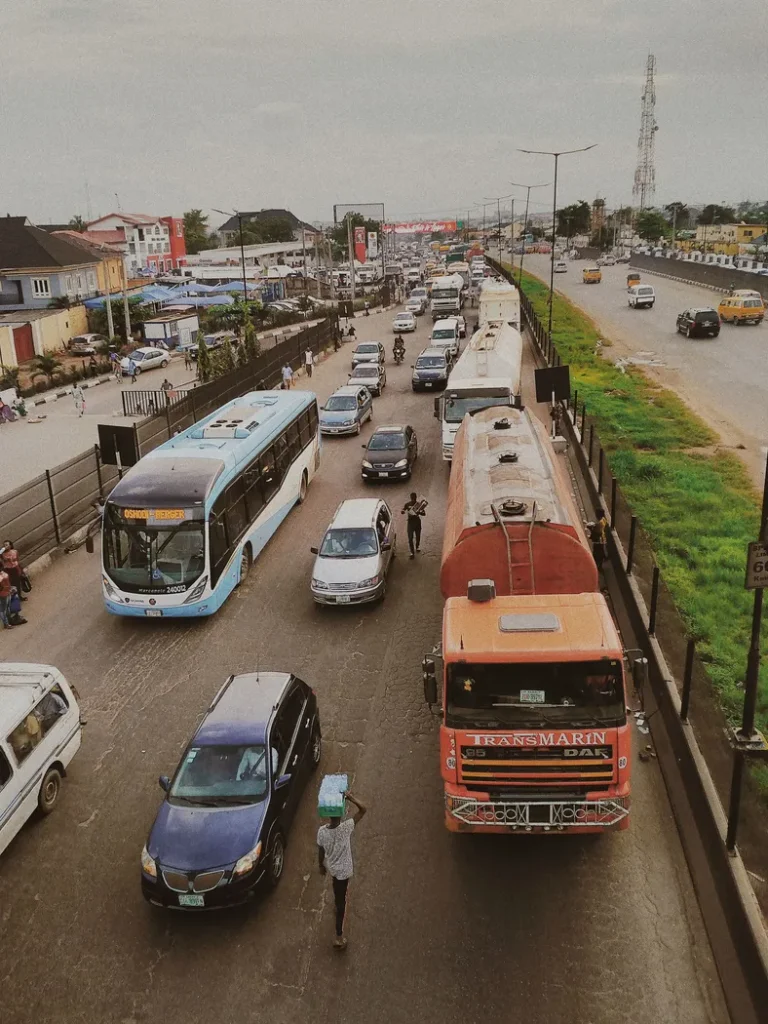
This is where it gets complicated. Anyone who has driven in Lagos knows danfo drivers aren’t the easiest people to manage. They stop wherever a passenger waves, block junctions, ignore signs and fight each other for customers. Not all of them, of course, but enough that you know exactly what I mean.
So here’s an awkward question: does managing that kind of chaos require organisations that are themselves quite tough? Transport unions organise loading, control access to parks and settle disputes between operators. A driver who would happily ignore a LASTMA officer may think twice before crossing the union man who decides whether he loads at the park tomorrow.
Daniel Agbiboa’s 2018 study in African Affairs helps explain how we got here. He traces agberos back to the insecurity of the structural adjustment years in the 1980s, then shows how their absorption into the NURTW politicised their role. In his account, agberos are central to the day-to-day running of Lagos transport while also being caught up in violent patronage and extortion. The same people keep order and cause disorder.
But effectiveness is not legitimacy. The fact that a union can discipline an unruly driver doesn’t give anyone the right to run an unaccountable collection system. And the system may create some of the problems it claims to solve. If a driver pays four collectors before he makes his first profit, should we really be surprised that he drives like his life depends on the next passenger?
I should be clear about one thing, though. The NURTW is not a street gang. It is a legal trade union, created in 1978 when the federal government merged a string of smaller transport unions, and it is affiliated to the Nigeria Labour Congress. Its right to exist and to collect dues from members isn’t in question. What I question is the size, legality and accountability of some of the charges collected in its name, often from drivers who have no real choice about paying.
The state also has more leverage here than it sometimes admits. In 2022, during a leadership crisis, Lagos suspended the NURTW from its parks and handed them to a committee chaired by MC Oluomo, before restoring the union in 2023. Whatever you think of how that was handled, it shows the government is not powerless over who runs the parks.
There is a harder truth underneath this. If the unions disappeared tomorrow, could the state manage tens of thousands of commercial vehicles on its own? If the honest answer is no, that goes a long way towards explaining why successive governments have struggled to change the system. It is a kind of mutual dependence, and mutual dependence makes reform very difficult.
The men behind the boys
Another common mistake is to assume area boys are just scattered young men acting on their own. Some are. Many are not.
In most neighbourhoods, everybody knows who to call. One phone call from the right person, and the same boys who looked ready to tear your car apart become polite and helpful. That isn’t randomness. That’s organisation.
Punch’s December 2025 investigation put some detail on this. Drivers at four different parks independently described a three-layer structure: park collectors, area coordinators and union executives. According to them, daily targets are passed upwards, while the collectors keep a commission. The boy standing beside the bus is the most visible part of the operation, but he is not the most powerful.
So where does politics come in?
You can’t talk seriously about area boys in Lagos without talking about politics. In its 2015 paper Governing Lagos, the Carnegie Endowment noted that bus regulation and containing area-boy extortion proved far harder for the state than reforms like tax collection, because they touched important political constituencies. Lagos politicians have close relationships with informal-sector associations, and those ties cut both ways.
The same report recorded interviewees’ claims that, under the Tinubu administration, some former area boys were absorbed into agencies such as LASTMA and the Kick Against Indiscipline brigade. That is history, and I’m not suggesting anything about the people working in those agencies today. It does show how long informal street networks and the business of governing Lagos have been intertwined.
The logic isn’t hard to follow. Politicians need people who can mobilise crowds and read a neighbourhood. Street networks need patrons, especially when jobs are scarce. But when people who wield informal force become useful to powerful people, enforcing the law against them gets complicated. I am not saying every area boy works for a politician, or that every politician keeps such company. That would need evidence I don’t have. I am saying that any serious fix has to look at those relationships.
The policy record is mixed. In January 2022, the state introduced an ₦800 consolidated daily levy, meant to replace the jumble of charges drivers paid. Within a year, Daily Trust was reporting that things had got worse, with drivers calling the new levy “official extortion” because the union collections continued alongside it.
The more promising step came in August 2026. The state, LAMATA, the NURTW and RTEAN signed an agreement under the Bus Industry Transition Programme. It aims to organise operators into cooperatives, move them onto franchises along eight Quality Bus Corridors and switch fare collection to digital payment. Cash is the oxygen of this whole system, so taking it out could matter a great deal.
But a policy is one thing and the street is another. As recently as this month, The Guardian found drivers on Oshodi routes paying between ₦200 and ₦500 each to about four different collectors in a single stretch.
It isn’t only danfos
If you’ve been to a wedding, a funeral, a concert or even church in Lagos, you have met the self-appointed parking attendant. Before you’ve found a space, someone is waving you in. At a crowded event, that help can genuinely be useful, and there is nothing wrong with paying for a real service.
Often, though, the man has no link to the organisers and no authority over the space. His only qualification is that he got there before you. Once you’ve parked, a “tip” becomes an expectation, and if you refuse, you start wondering whether your side mirror will still be there when you come back.
The government knows this. In February 2025, the Governor’s Special Adviser on Transportation, Sola Giwa, warned motorists against paying touts to park on bridges and open spaces, and said a payment to a tout would not excuse an offence. LASPA has said plainly that touts collecting parking fees are acting illegally, and it plans to pilot regulated on-street parking before the end of 2026. Let’s be honest, though: motorists who park where they shouldn’t are part of this problem too. Paying a stranger doesn’t make an illegal space legal.
Then there are the bolder operators. Around high-profile events, some touts aren’t interested in parking at all. They are interested in who’s arriving. A flashy car becomes an opportunity, and a familiar face becomes a target.
This year, the Lekki–Epe corridor has become the best-known example. Residents around Marwa, VGC, Ikota and Abraham Adesanya have complained of boys demanding money from motorists stuck in traffic or broken down, and of attacks on drivers who refuse. Locals even have a name for the fee: Omotaku. In March 2026, a content creator’s Mercedes had its windscreen cracked by stones after he refused to pay. The state has carried out several arrests along the axis, including a midnight Rapid Response Squad operation in August.
These aren’t obscure back streets. This is a major expressway serving thousands of commuters every day. Out there, the more prosperous you look, the more you are assumed to owe.
My own encounter
I’ve been on the receiving end of this more than once. The time that stays with me was when I was helping a friend move. We were doing the most ordinary thing in the world, carrying furniture from one place to another, and a group of young men decided they were owed money because our van had entered their territory.
I knew enough about the area and how things work there to avoid paying anything close to what they first demanded. But I kept thinking about everyone else. What about someone who has just arrived in Lagos, or doesn’t speak Yoruba, or has nobody to call? What about an elderly person, or a woman moving alone, or someone who simply can’t afford another surprise expense?
Why should anyone need local connections to exercise an ordinary right? The fact that I could navigate it didn’t make the demand legitimate. It only showed how well we have learned to accommodate it.
Why do we keep paying?
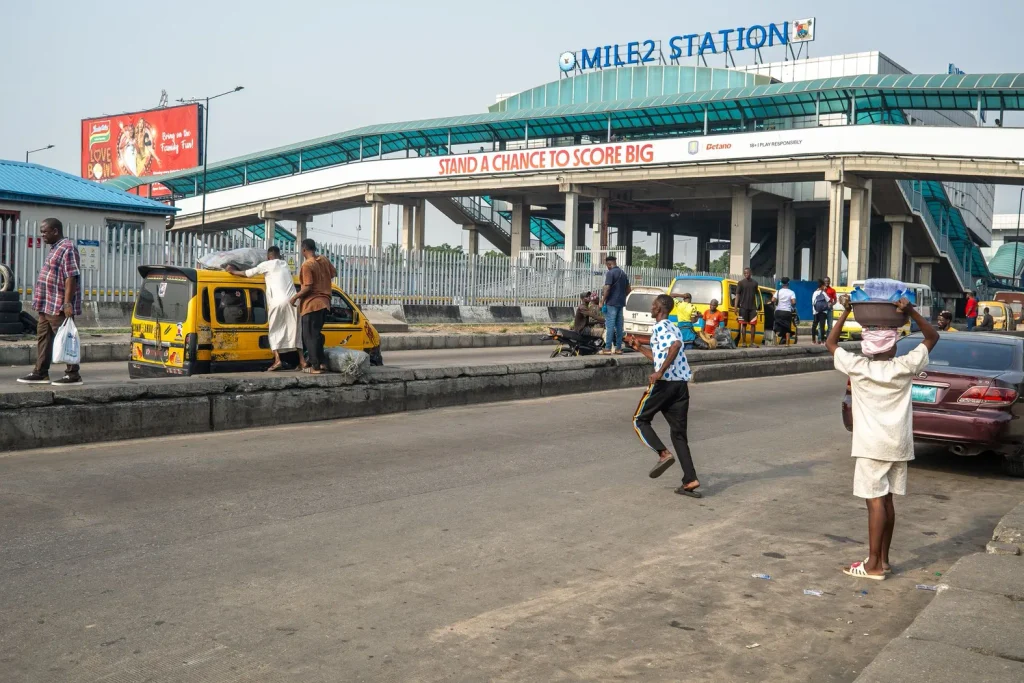
The whole system runs on one thing: fear. It rarely needs actual violence, because the possibility is enough. A few boys surround your vehicle, voices rise, a crowd starts to gather, and someone stands in front of your bumper. Suddenly, whatever they’re asking for looks like a reasonable price for getting out of there.
Think about what’s actually being bought. A man buys a fridge with his own money, pays for delivery and then has to pay strangers because the fridge is entering their street. He isn’t paying for a service. He’s paying for a promise not to interfere. That is extortion dressed up as local custom.
We also pay for perfectly understandable reasons. We’re in a hurry. The children are in the car. We’re carrying something valuable. The amount seems too small to fight over. Each of those decisions is rational on its own.
Together, though, they make the business more profitable. Every payment teaches a collector that intimidation works, so the next person faces a bolder demand, or one that has jumped from ₦1,000 to ₦5,000. I’m not blaming victims. Nobody should risk their safety to prove a point. But it explains why a system almost everyone complains about keeps going.
The awkward security argument
For all their faults, some of these networks provide things the police often don’t. They know who lives on the street, who has just arrived and who looks out of place. They know the local troublemakers and the people who can calm a situation down.
Researchers have noticed this too. Olawale Ismail calls it “securo-commerce”, meaning residents pay various fees either to buy security or to keep insecurity away. In a 2025 paper, Bright Joseph Njoku shows that during the COVID-19 lockdown, residents of Fadeyi, Mushin and Ojuelegba turned to their area boys for protection against groups like the “One Million Boys”. It’s the old Yoruba logic: Olè ló mọ ẹsẹ̀ olè tọ̀. It takes a thief to track a thief.
But usefulness is not legitimacy. Being able to spot a criminal doesn’t give anyone the right to tax innocent people. And there’s a real danger in depending on people who can both threaten your safety and offer to protect it. At what point does protection become just another word for extortion? And when does the person keeping trouble away become the person who decides whether trouble arrives at all?
Beyond extortion: public order
There is also the open drug use. At certain junctions, parks and gathering spots, you’ll see young men smoking what looks very much like cannabis in full public view. Not every area boy uses drugs, and not everyone smoking at a junction is part of an extortion ring. Still, a 2010 study of 129 Lagos area boys by Salaam and Brown found substance use to be common, and linked it to family and neighbourhood factors.
My point here isn’t to lump drug use together with violent crime. It’s about enforcement. If a group can openly ignore one set of laws while exercising informal authority over everyone else, what does that say about the reach of the state? A city can’t credibly demand that residents obey the law while some groups behave as if the rules don’t apply to them.
Are we really any different?
Before we put all the blame on the boys, we should look in the mirror.
Estate associations do real work. Security, waste collection, roads and shared facilities all cost money, and residents should pay their fair share. But we all know the other kind of charge: the arbitrary “moving-in fee”, the levy for bringing in a truck of sand, the gate that stays shut until you pay something nobody can explain.
The methods are more polished. The collectors are better dressed, and there might even be a printed receipt. But the question is the same: what gives anyone the right to demand money from another person without a legitimate basis?
Rent-seeking isn’t confined to the streets. It shows up wherever people realise that controlling access to something lets them charge for it. Once we accept arbitrary collections in one setting, it gets much harder to explain why they’re wrong in another.
Why arrests alone won’t fix it
Suppose the police clear out every collector at a busy junction tomorrow. What happens next? If the money is still there, another group fills the gap. If the people organising and benefiting are untouched, the operation simply restarts under new management.
We’ve seen this before. In the early 2000s, after the army chased area boys off the streets, the Tinubu government set up a skills centre at Ita Oko, a disused prison island, promising six months of training and a job at the end. Within months, local media were already reporting that the boys were drifting back to their old spots.
The problem with easy money
Poverty and unemployment matter, and the research backs that up. But hardship doesn’t automatically produce extortion. Plenty of people in far worse situations earn an honest living.
Jobs alone also won’t kill the appeal. Imagine you’ve grown used to collecting cash every day, with no fixed hours and no boss. Now someone offers you a 7am start, a supervisor and a lot more effort for less money. Unless the alternative is genuinely better, and the easy money dries up, you’ll end up with a man who has a proper job and still collects on the side. Training schemes can help, but the incentive has to change.
Not every levy is the same
This is why I think we need two different approaches. Union levies, however excessive, come from a legal organisation whose leaders can be named, summoned and held to account. That calls for regulation: publish the dues, collect them digitally, audit the books and punish abuse. The bus transition programme, if it is implemented properly, is a step in that direction.
The boys who stop your delivery van, block your moving truck or demand a cut of your building materials are a different matter. They have no union, no licence and no legal basis whatsoever. There is nothing to regulate, only something to stop. If I had to choose where the government should start, it would be here. These collections hit ordinary residents and small businesses directly, they are the most unpredictable, and they are the easiest to declare plainly illegal.
None of this means the transport levies get a free pass. It means a crackdown that treats every levy the same will either stall against a powerful union or miss the people causing the most fear on our streets.
The longer we wait, the harder it gets
There’s another reason to act now rather than later. Problems like this don’t stay the same size. Every year they’re tolerated, the networks grow, the money grows and the people at the top make more friends in high places. At some point, a group stops asking for permission and starts setting terms.
We have seen this film before. In the Niger Delta, militancy grew until the federal government offered an amnesty in 2009, complete with cash payments and training. In 2022, the NNPC handed a pipeline surveillance contract worth billions of naira to a company owned by Tompolo, a former militant leader. Whatever its results, that tells you who ended up holding the cards. In the North-West, states like Zamfara and Katsina have signed peace deal after peace deal with bandits since 2016, and many have collapsed once the armed groups regrouped.
Let me be careful here: area boys are not bandits or militants. But the pattern is familiar. We ignore it while it’s small, accommodate it as it grows, and eventually negotiate with it on its own terms. Lagos still has time to avoid that path. It won’t have that time forever.
So, what would it take?
There is no quick fix. This problem has been around too long and adapted too well to disappear because a government announces another crackdown. But difficult is not impossible. A serious response would need to do several things at once:
- Make lawful charges visible. Publish every legitimate transport levy, collect it digitally and issue receipts, so that any cash demand at a bus stop is obviously illegal. The digital fares in the new bus programme are a start.
- Make reporting safe. Residents and businesses need a credible way to report extortion, with real follow-up and protection from retaliation.
- Go after the organisers, not just the boys. Accountability has to reach the people who organise, protect and profit from these collections. Follow the money.
- Separate the legitimate from the coercive. If unions perform useful administrative work, define it in law, regulate it and audit it. Do the same for genuine community and estate groups.
- Build the state’s capacity to enforce. That means consistent, everyday enforcement rather than the occasional dramatic raid.
- Offer real exits. People who genuinely want to leave these networks need options that can compete with street income.
And then there’s us. Every time we shrug off an arbitrary levy as “just how Lagos works”, we help keep it alive.
The Lagos we’ve learned to tolerate
Imagine moving into a new flat without budgeting for the boys. Imagine a delivery driver finishing his route without strangers flagging him down. Imagine driving through Lekki without worrying that a traffic jam or a nice car might attract the wrong kind of attention. Imagine a danfo driver paying one clearly defined charge and keeping the rest of what he earns.
None of that should be extraordinary. In much of Lagos, it still is.
The area boy problem is hard to solve because it is no longer just about area boys. It’s about the money that sustains them, the relationships that protect some of them, the gaps in the state that let them operate and our own willingness to look away when standing up is inconvenient. It may even involve people who condemn it in public while quietly benefiting from arrangements that look a lot like it.
We can arrest the boys, relocate the parks and announce new levies. Until we question everyone who benefits, and not just the young man by the bus, we’ll be fighting this same battle for another generation. We get the streets we tolerate.
Stay safe, folks.
Authors Note: All images are artistic in nature and for illustrative purposes only. They are sourced from stock photography and do not identify any known persons for whatever purpose.
References
Research
- Agbiboa, D. E. (2018). Informal urban governance and predatory politics in Africa: The role of motor-park touts in Lagos. African Affairs, 117(466), 62–82.
- Akinwale, A. A. Career pathways and youth metamorphosis into area boys in Lagos metropolis, Nigeria. African Journal for the Psychological Study of Social Issues.
- de Gramont, D. (2015). Governing Lagos: Unlocking the Politics of Reform. Carnegie Endowment for International Peace.
- Njoku, B. J. (2025). From problem to solution: The role of Fadeyi, Mushin and Ojuelegba area boys in Lagos’ COVID-19 lockdown insecurity. Glocalism: Journal of Culture, Politics and Innovation.
- Salaam, A. O. & Brown, J. (2012). Lagos “area boys”, substance usage and potential risk factors. International Journal of Mental Health and Addiction.
- Ismail, O. Work on “bases”, “junctions” and securo-commerce in downtown Lagos (author profile).
- Momoh, A. (2000). Youth culture and area boys in Lagos. In A. Jega (ed.), Identity Transformation and Identity Politics under Structural Adjustment in Nigeria. Nordic Africa Institute.
- Area boys, Wikipedia (background on jaguda and Boma boys).
Reporting and official statements
- Daily Nigerian (May 2025). 75,000 Danfo commercial buses ply Lagos roads – LAMATA.
- Punch (December 2025). “Tears for drivers, cheers for agberos: How N45bn annual levies pressure Lagos SMEs, inflate transport fares.”
- ICIR (July 2021). Money for the boys: How agberos pocket billions of Lagos transport revenue.
- The Will. Toiling for agbero: Pitiable story of Lagos commercial vehicle operators.
- The Guardian (November 2026). Lagos drivers face daily harassment over illegal roadside levies.
- The Guardian. Years after transport harmonisation levy, NURTW continues extortions.
- Daily Trust. A year after the ₦800 harmonised levy.
- Sweet Crude Reports (January 2026). Truckers petition Tinubu over extortion in Lagos.
- Nairametrics (August 2026). Lagos moves to phase danfo into franchise bus system.
- BusinessDay. Lagos, NURTW, RTEAN sign MoU on Bus Industry Transition Programme.
- The Guardian (February 2025). Lagos warns against paying touts to park vehicles on bridges, open spaces.
- Leadership. LASPA warns against illegal car park operators.
- The Guardian (2026). Lagos to begin paid on-street parking to tackle gridlock and The challenges, benefits of Lagos paid parking policy.
- Sunday Punch (2026). Lekki–Epe Expressway touts investigation.
- Parrot Nigeria (August 2026). The Agbero Apocalypse: Inside Lekki’s luxury car extortion crisis.
- First Weekly (August 2026). Midnight raid: Lagos cracks down on hoodlums attacking motorists on Lekki-Ajah Expressway.
- The New Humanitarian / IRIN. Area Boys: a growing menace on the streets of Lagos.
- National Union of Road Transport Workers, Wikipedia.
- Gazette (March 2022). Sanwo-Olu suspends NURTW in Lagos.
- Leadership (2023). Lagos lifts suspension on NURTW, disbands parks, garages committee.
- ThisDay (December 2022). Tompolo and the amnesty deal.
- The New Humanitarian via AllAfrica (September 2025). Why bandit amnesties are failing in Nigeria’s Northwest.
- Leadership. Negotiation at gunpoint.